The Applications of EPDM for DIY
In this paper, we will examine the applications of EPDM rubber roofing systems for the DIY market. We will look at the types of EPDM available, the DIY market in the UK, examine and discuss why EPDM is increasing in popularity for self-install projects, and how it compares to some of the other most common forms of flat roofing available for DIY application.
As the UK’s leading Elevate EPDM importer and supplier, Permaroof UK offer award-winning sales and customer support to both our trade and DIY clients. Talk to us and let us help you get your project done.
In this guide:

The rise of EPDM for DIY
EPDM rubber roofing has a proven track record spanning more than four decades in
the commercial sector all over the world. It has also offered trade roofing professionals
the sustainable solution to flat roofing that they have been looking for to replace
outdated, traditional flat roof coverings, such as bituminous felt (shown above).
Felt, also still known as tar paper in the DIY
market, has historically been among the most
popular of roofing materials for many
commercial and domestic installations. With a
short lifespan, and a tendency to bubble and
crack during temperature fluctuations, felt has
proved to be falling short in performance
compared to modern roofing materials,
systems and solutions.
In the DIY sector, flat roofing has been relatively unreachable to homeowners without
high levels of skill. EPDM roofing systems have been changing attitudes in domestic
roofing for nearly twenty years, since the first introduction of EPDM flat roof kits
Fast, easy and safer to apply than hot
bitumen-applied felt roofs, EPDM
membranes are ideal for domestic roofing
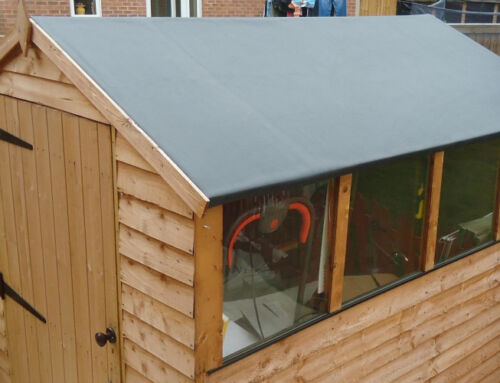
such as sheds, garages, garden offices and
can form a perfect base layer for green
roof projects.
Industry training for DIY roofers and EPDM
supplier support have contributed to the rise in popularity in the DIY sector of this
revolutionary roofing system. Today, DIY EPDM flat roofing is much more achievable
for the average homeowner. Let us take this idea to the next level and examine it in
more detail.
The current situation of DIY in the UK
The DIY (Do-It-Yourself) industry is expected to be worth more than £8.3 billion by 2018, proving that DIY has never been so popular. It is estimated that more than half of the UK’s homeowners will tackle DIY home improvements of some type every year.
In the over-55s age bracket, the average spend on DIY, according to national and industry figures, is £4000 per year. One third of people in other age ranges spent more than £500 on DIY in 2017. Although around 40% of the UKs homeowners prefer to employ a professional tradesman for home improvements, there are certain basic tasks that are routinely and confidently self-applied, according to a recent survey of homeowners:
- Hanging a picture – 56%
- Painting/decorating – 44%
- Changing a fuse – 39%
- Assembling flat pack furniture – 44%
- Putting up a shelf – 20%
A growing number of DIYers are tackling larger projects around the home, which have traditionally been carried out by professionals. With house prices and the cost of living on the increase, today’s homeowners are far more likely to stay in their current homes and make improvements themselves to increase living space.
According to a major UK bank, the number of people moving home in 2017 fell to 367,000, less than half the number a decade ago at 705,900 and one per cent lower than in 2016. In addition, the report found that three in five homeowners felt that a house move had become more difficult over the past 10 years. 25% of those asked said they would move to a new house or make improvements in the next five years.

Why is DIY growing in popularity?
Accessibility to affordable materials
One of the top reasons DIY is growing in popularity is the improvement in accessibility and affordability of basic building materials. Some of today’s biggest DIY chain stores began to appear in the late 1960s. These stores started to take over from the High Street ironmongers’ shops relatively slowly at first, experiencing a surge in popularity during the 1980s as technological innovations relied less heavily on workmanship and delivered better products that became easier to install.
Affordable power tools As DIY chain stores spread across the UK, buying power became greater, and items such as power tools that previously were only affordable and justifiable to professional tradespeople, became accessible to the average homeowner. Most homeowners can invest in electric drills, saws, sanders and tools to make lighter work of bigger projects and this has made a difference.
Making an investment in home improvements The 1980s was a decade when homeowners were first given the option to buy their Local Authority Housing at reduced prices in a Right to Buy initiative. This opportunity created a generation of new homeowners, who then began investing in improving these homes for the first time.
DIY materials kits
Also, the introduction of DIY off-the-shelf kits for homeowners has made the purchase of materials much easier. Traditionally, a ready reckoner was used to produce a materials list, and the experience of a tradesperson was heavily relied upon.
Some of the country’s largest DIY retailers and suppliers are now creating solutions specifically with DIY applications in mind, making materials cheaper and more accessible for the DIY market. Now homeowners can be assured that the right materials, in the right quantities can be easily purchased, minimising waste and avoiding over- and under-buying.
Growing confidence with training and resources
Confidence is growing in the DIY market all the time in the UK. This is in part due to increased dedicated supplier support for DIY customers. Industry suppliers like Permaroof are offering more support in the form of training days, flat roof kits and resource libraries full of detailed tutorials in both download and video form to support homeowners in projects that would traditionally only be undertaken by a professional. Although confidence is growing, there is a safety aspect to consider in all types of DIY projects, and particularly roofing.
When Permaroof introduces an EPDM flat roof kit, it makes no assumption of the skills of the installer. DIYers should assess their own skills level and attend a training course or employ the skills of a professional EPDM installer if in doubt.
Now flat roofing is becoming accessible to the DIY marketplace, let’s look at EPDM more closely to find out why it is the perfect material for DIY flat roofing.
What is EPDM? – quick facts
EPDM is acceptably known by its abbreviated form, but in full is Ethylene Propylene Diene Monomer. It is a synthetic rubber membrane and its two primary ingredients, ethylene and propylene, are derived from oil and natural gas.
EPDM is available in both black and white and is available to buy in a wide range of sizes in both standard weight of 1.14mm and premium grade for heavy duty installations in 1.52mm. In addition, there is a newly released, fire retardant version at 1.14mm standard grade.
EPDM rubber sheet membrane is designed primarily for low-slope, flat roofing, and has been used widely around the world commercially for more than 40 years. During this time, is has proved itself in empirical experience in field applications to have the roofing industry’s longest average service life.
It has not been until relatively recently (during the past two decades) that its reputation has led to an explosion of use into the domestic market, and subsequently into the DIY sector.
How does EPDM compare to felt for DIY?
Bituminous roofing felt is a widely accepted, (and perhaps the most commonly first-thought-of) option for DIY roofing projects such as shed roofing.
The earliest examples of roofing felt appeared in the 1800s Californian Gold Rush, when a tar paper was used to protect the typically temporary buildings of the period from the elements.
It was during the 1930s that roofing felt began to be used in the UK for domestic waterproofing. Until recently almost all types of roofing felt were impervious, which has impaired the performance of flat roofing historically, leading to damp inside a building and eventually to dry rot.
The modern versions are often vapour permeable, yet still do not perform well in roofing with insulation and are today most commonly used as a secondary barrier against wind driven rain and snow.
Felt roofing can take time to install, and the process often involves the use of hot bitumen on the roof and ensuring that an effective seal is in place along the edges and joints.
This can be a complicated and potentially hazardous task for an inexperienced DIYer and can prove messy. If not carried out correctly, the felt roof can fail very quickly.
In contrast, EPDM rubber roofing can be the ideal solution for DIY application due to ease of application and provides a long-lasting solution to waterproofing that outperforms every other roofing membrane with a life expectancy of more than 50 years. Most EPDM systems are now available with 25-30-year guarantees (following decades of field testing).
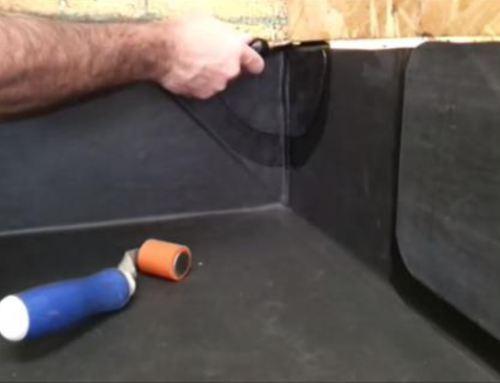
Self-adhering components of the system, such as flashing, for example, has increased roof system quality and ease of installation in such previously problematic areas. As it is applied in a single piece, it means that EPDM is easy to fit using non-hazardous adhesive with minimised creation of vulnerable areas across the entire installation.
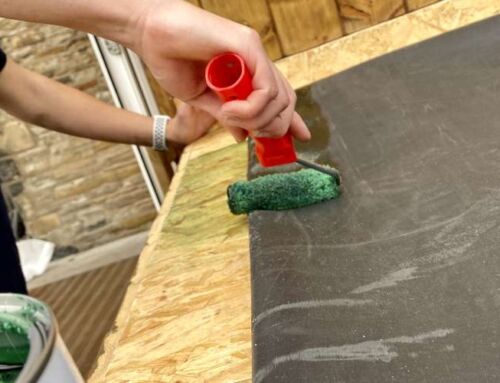
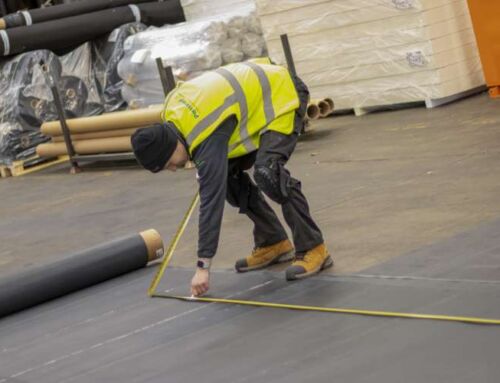
Installing an EPDM flat roof does not require the same level of tools that other materials, such as felt, will require. Simple rollers and pads, a domestic broom, a dustpan and brush, measuring tape and a piece of chalk are typically required for an EPDM roof system.
Why is EPDM sheet roofing popular for DIY?
Here are the most common reasons for the rise in recent popularity of EPDM sheet rubber roofing, based on the consumer feedback received by the UK’s leading EPDM flat roof system supplier:
Flexibility, durability and ease of application
EPDM sheets can help DIY installers meet the challenge of flat roofing through flexibility, durability and ease of application.
Traditional roofing materials historically required the use of hot bituminous substances, which can prove hazardous to the untrained or inexperienced.
In contrast, EPDM is applied using a simple, cold water adhesive, which is rollered or sprayed onto both the membrane and the roof deck and allowed to ‘go off’ slightly before the membrane is adhered and rolled flat into place.
No joins
A traditionally vulnerable part of the roof material can be joins. Joins in membranes are the most likely areas to fail, leading to water ingress and damage to the roof deck. In the worst cases, and if damage is left without repair, internal damage can occur to decoration and goods inside the building. EPDM roofing systems are typically applied in a single sheet, eliminating the necessity to address joins and create these vulnerabilities.
Repairs and extrusions
If EPDM flat roof membranes do need to be joined or repaired, the system backs this up with a highly effective method of joining using specialist seam tapes, EPDM accessories and adhesives to make this simple, while maintaining waterproofing at an extremely high level.
For extrusions, which can also be vulnerable, there are specifically designed EPDM accessories and application methods to deal with extrusions such as:
- Chimney outlets
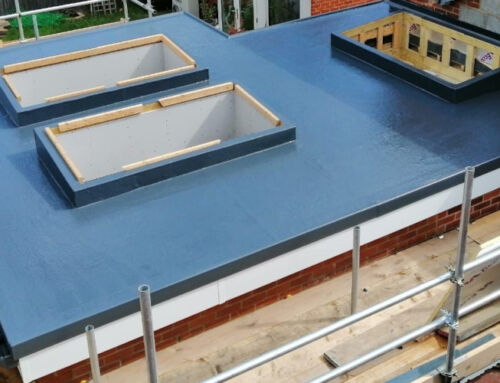
- Roof skylights
- Domes
- Drain outlets
- Fixed satellite equipment
The introduction of the DIY EPDM kit has revolutionised the system for DIY and made it much more accessible to the average DIY home improver.

How DIY EPDM roofing kits have driven popularity
EPDM rubber roofing kits suitable for DIY use are sold because they carry huge benefits for self-installation.
This is in terms of no waste, simplified application using single-piece membranes and cold-water adhesives.
Permaroof UK Ltd supports both trade professionals and DIY homeowners in basic EPDM flat roofing with standard and bespoke kits for shed, garage, extensions and green roofing projects.
EPDM roofing kits for a range of domestic projects, including:
- Shed roofing
- Garage roof replacement
- Flat roof extension projects
- Green roofing
- Garden office roofs
The DIY Permaroof-in-a-Box kits are designed to come ready-to-install with everything included such as membrane, adhesive, tools and roof trims, although basic kits including membrane and adhesive only are also available.
What are standard sizes?
EPDM flat roof kits can be purchased online in standard sizes, which is ideal for shed and garage roofing, where such standard sizing also applies.
Standard shed roofing sizes are as follows:
- 6 x 4 m
- 8 x 6 m
- 8 x 4 m
- 8 x 10 m
- 8 x 8 m
- 10 x 12 m
Garage roofing kits are available in a range of sizes as follows:
- 12 x 12 m
- 16 x 8 m
A DIY EPDM flat roof kit can also be tailored to suit an individual project of almost any size up to 17m x 30m and can be uniquely tailored to include fixings if necessary, for adjoining walls or tying into other roof surfaces.
Permaroof support for DIY EPDM flat roofing kits
Levels of industry support for DIYers has been steadily increasing over the last decade, and this has influenced the rise in popularity of the DIY marketplace for some of the traditionally tricky projects, as we have discussed.
Permaroof is an award-winning industry leader in customer support and takes a clear approach to providing our DIY clients with a range of solutions to assist in every aspect of DIY EPDM flat roofing with a kit. From the very start, Permaroof can help with dedicated sales teams who are experienced and trained to talk you through and point you in the direction of the right tools and materials to complete your project.
Building a kit list
Permaroof support tools include a useful EPDM kit builder app that can be handy for complex projects. Each element of the project can be inputted and automatically calculated to produce an accurate materials list for a bespoke DIY EPDM kit in just four stages. The list can then be saved, printed or sent electronically to Permaroof for an accurate quotation.
Genuine EPDM membranes & accessories
Permaroof UK Ltd is the premier importer and stockist of genuine Firestone EPDM membranes and accessories and the leading EPDM supplier for both trade and DIY.
With a wide range of high-quality products, EPDM sheet rubber application training and a free-to-use UK-wide approved EPDM installer network, we offer an unmatched support system for our DIY roofing customers.
Finally, Permaroof offer a range of free flat roof resources for both trade and DIY roofing in the form of PDF downloadable installation guides, technical data and useful information and a comprehensive video library.
Flat roof resources
Our resource library offers DIY EPDM installers a wealth of information in the form of:
- PDF installation guides to download for free
- Comprehensive video tutorials
- Detailed, task-specific EPDM tutorials
- Technical specifications
- Data sheets
- Safety sheets
- Product catalogues
- White papers