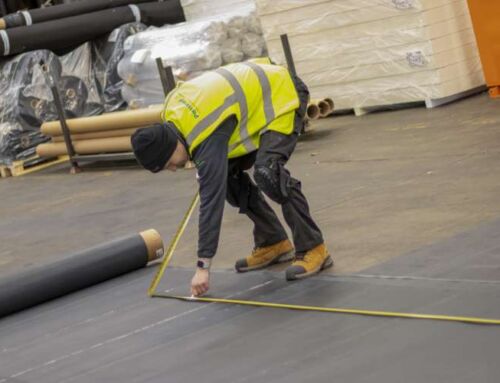
The Uses and Benefits of Liquid Waterproofing
In this guide we will examine the uses and benefits of liquid waterproofing for both domestic and commercial situations. Find out why home and business owners are making the move from traditional roofing materials to the latest in liquid rubber applications and systems.
With a wide range of applications, liquid rubber waterproofing systems offer an alternative way to ensure a reliable and long-lasting finish to domestic and commercial flat roofing, garden walkways, steps, patio and balcony areas and commercial car parking.
The benefits of using liquid PU systems are also far reaching in terms of longevity and durability, ease of application and cost effectiveness. Permaroof100 liquid rubber systems give exceptional value and performance, and with application training available, can enable trade roofers to extend their business potential, or DIY roofers the confidence to tackle a large waterproofing project at home.
In this Guide:
How to choose the right liquid waterproofing
What is liquid waterproofing used for, and what are the benefits it brings?
- Flat Roofing
- Pitched Roofing
- Gutters and Drains
- On Concrete
- Car Parks
- Encapsulating asbestos
- Benefits

What is liquid waterproofing?
Liquid waterproofing is applied like paint to a surface which, when dry and fully cured, forms a synthetic, rubber-based membrane with superior waterproofing capabilities. There are several types of liquid waterproofing available, based on compounds such as:
- Cement
- Silicone resins
- Acrylic copolymers
- EPDM
- Polyurethanes
- Bituminous and asphalt waterproofing agents.
P500 liquid PU rubber is a high-performance, durable liquid waterproofing system with a long life expectancy of approximately 25 years. Liquid PU cures by chemical reaction at ambient temperatures to form a flexible rubber membrane.
A pre-measured accelerator is added to the rubber compound before application. The liquid nature of the product makes it possible to apply liquid rubber to many materials regardless of their shape and is often chosen for its ability to be used in hard-to-reach or oddly-shaped roofing areas where application of sheet membrane would prove difficult or impractical.
Permaroof100 liquid systems contain a self-levelling compound that can be easily removed for pitched roofing or vertical surfaces with the addition of the product Permathix, which can be added to both accelerated and non-accelerated mixes. There are different types of liquid waterproofing systems, so how do you decide which is the right type for your project?
How to choose the right liquid waterproofing
Use: for roofs that will have foot traffic, such as within a rooftop garden or patio area, liquid waterproofing with high resistance to pedestrian traffic would be applied, such as P100 liquid PU.
Level of protection: some systems may consist of heavy protective layers as well as finish layers that prevent separation and protect the finished surface from environmental agents and mechanical damage.
Compatibility of materials: if liquid waterproofing is to be used as a barrier layer, with other roofing materials covering it, then the technical characteristics of the membrane must be taken into account, to make sure that it will carry the weight and also that it will not degrade beneath the selected covering. For example, if using a cement-based roofing tile, the membrane must be resistant to cement alkalis.
Liquid PU rubber roofing membrane is suitable for application over a wide range of surfaces and is an excellent medium for flat roof repairs. It can be successfully applied to:
- Existing concrete roofing
- Wood roof decks
- Metal roofing systems
- EPDM sheet membrane
- Asphalt roofing
- Bituminous felt roofing (or tar paper)
There are some restrictions however, such as use on a wooden roof deck. Liquid rubber will successfully cover a wood deck but will be wasted if the wood has significant rot. It is advisable to replace damaged wood before application to fully realise the benefits. Preparation of a surface area is critical, when loose chippings or torn existing roofing would be completely removed and the area cleaned.Careful application of additional materials: during application of the roofing system selected to cover the liquid waterproofing, prevent damage to the (fully cured) membrane by ensuring that tools such as trowels do not score or perforate the membrane.
Insulation capability: P500 PU liquid waterproofing does not have insulation capabilities other than its potential to react through pigmentation and colour technology in certain weather conditions.
Permaroof100 liquid PU waterproofing systems are the latest in roofing innovation.
Typically popular in commercial sectors up to now, liquid rubber waterproofing is now growing in the domestic sector for roofing, anti-skid surfacing, basement tanking, ornamental ponds, encapsulating asbestos and much more.
The nature of the product and its capability to seal the smallest cracks and gaps in conventional flat roofing has also ensured its place in the flat roof repair market.
Permaroof offers a liquid PU Emergency Roof Repair product that is fast and easy to apply on all types of roofing surfaces for a quick, reliable repair

What is liquid waterproofing used for, and what are the benefits it brings?
Liquid waterproofing has both domestic and commercial applications. Because of the durability of the product, and the ease of application it can be used in many situations and can be used to cover a range of materials.
Flat roofing
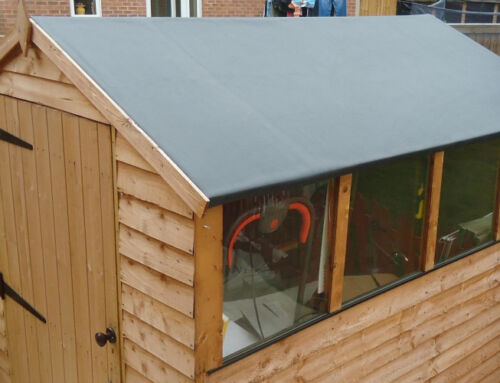
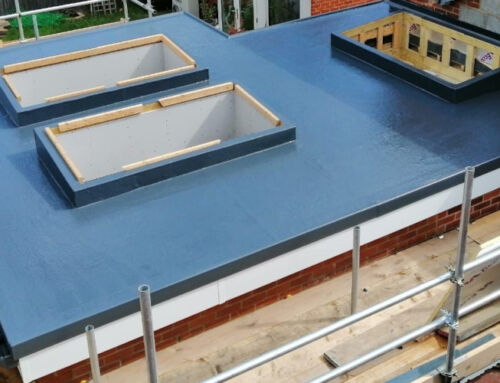
The use of liquid PU on flat roofing is among the most popular applications.
Traditional types of liquid rubber waterproofing on flat roofs only offered 100% effectiveness after a curing time of approximately 14 hours, but the latest liquid systems can offer rapid curing and be resistant to rain within just 30 minutes of application.
Some types of liquid PU also contain a self-levelling compound to give the best coverage for flat roofing.
Liquid membrane can be used to repair flat roofing of many types:
- Damaged EPDM membrane
- Cracked concrete roofing
- Split felt roofing
- Worn asphalt roofing
- And more.
Liquid PU is the ideal medium for roofing with hard-to-reach, or irregular parts to the roof that cannot be effectively sealed with a rubber roof membrane.

Pitched roofing
Both accelerated and non-accelerated liquid PU can be made suitable for use on pitched roofing in addition to flat roofing. To remove the self-levelling compound element of the product, a pre-measured additive is commonly used before application. The Permaroof100 liquid waterproofing system has Permathix additive for this purpose.
Roof extrusions, such as chimney flues or roof skylights can be effectively sealed more easily with liquid rubber than any other roofing material.
Gutters and drains
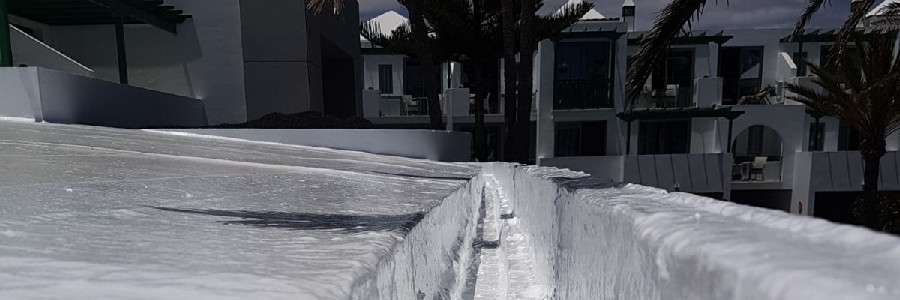
Liquid rubber membrane can be applied to box gutters in domestic and commercial situations for additional waterproofing, for aesthetic purposes over metal gutters or to repair damaged metal or uPVC gutters.
Using a geotextile bandage in conjunction with an accelerated liquid PU waterproofing product can create an effective seal to repair cracked gutters or those with holes.
Liquid PU will cover lightly-rusted gutters, but for high levels of degradation, the surface should be cleared of loose rust with a wire brush. There should be no other rust remedy required. Holes left where metalwork has rusted through, should again be covered and sealed with geotextile bandage embedded into the liquid.
Over concrete
The application of liquid waterproofing over concrete is a common way to extend the life of old, damaged flat roofing. Concrete roofing or paving cracks and dries out over time and it is expensive to remove and replace.
Concrete can only be covered with liquid waterproofing after the full curing process is completed. Green (wet) concrete loses its capabilities and strength if combined with liquid PU.
Concrete cures over approximately three weeks, but this is largely dependent on the environment and geographic location of the concrete.
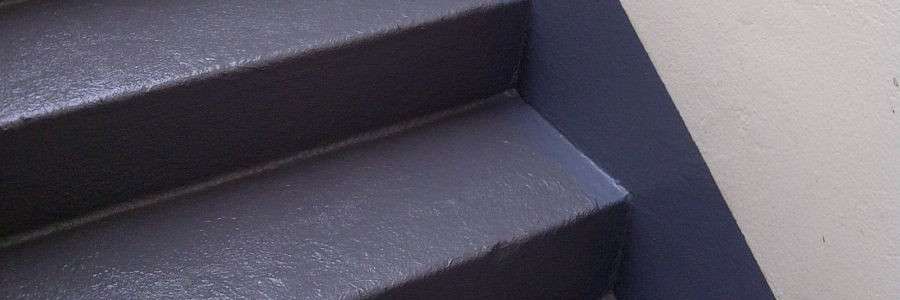
Garden steps made of concrete can be made safer by the application of liquid rubber with the addition of a non-slip medium during the top layer curing process. The same process and technique can be applied to concrete balconies and terraces.
Liquid rubber will also bond to ICF’s (Insulated Concrete Forms), creating a seamless waterproof membrane.
Liquid rubber does not contain solvents that causes other products to degrade the foam.

Car parks
Car parking areas can benefit from liquid waterproofing with the capability of creating a non-slip or anti-skid surface.
Once the main liquid PU layer (some areas may require several coats if subject to heavy use) is applied and fully cured, a topcoat UV layer is applied in a single coat. An anti-slip medium is then added to the surface area while the topcoat is still wet. Once dry and fully cured, the anti-skid medium is fully embedded into the liquid rubber surface.
Typical anti-slip mediums are:
- Silica sand – a fine finish suitable for pool areas and balconies
- Silica beads –to give greater anti-slip benefits
- Mineral filings
- Ponds and water features
Liquid rubber is ideal for sealing cracks in garden ponds and water features of many types, including most polymer pond liners, concrete basins and plastics. Ponds made from silicone and solvent-based materials cannot be treated with liquid rubber.
Surfaces must be cleaned and dried before application.
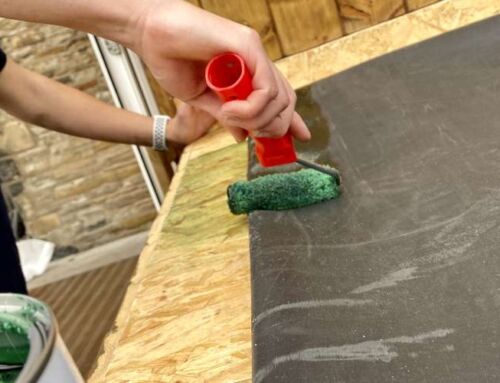
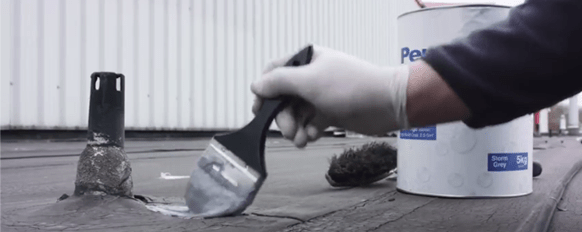
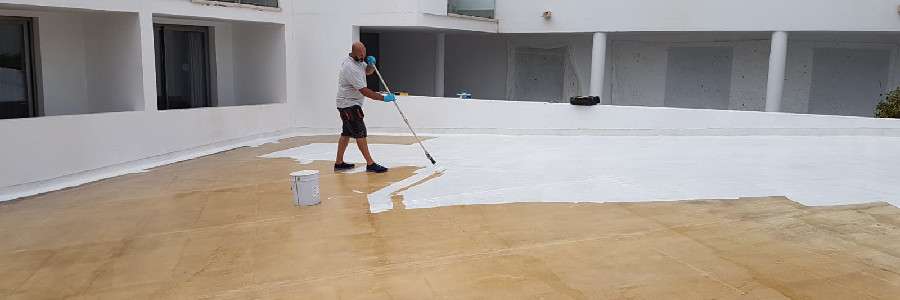
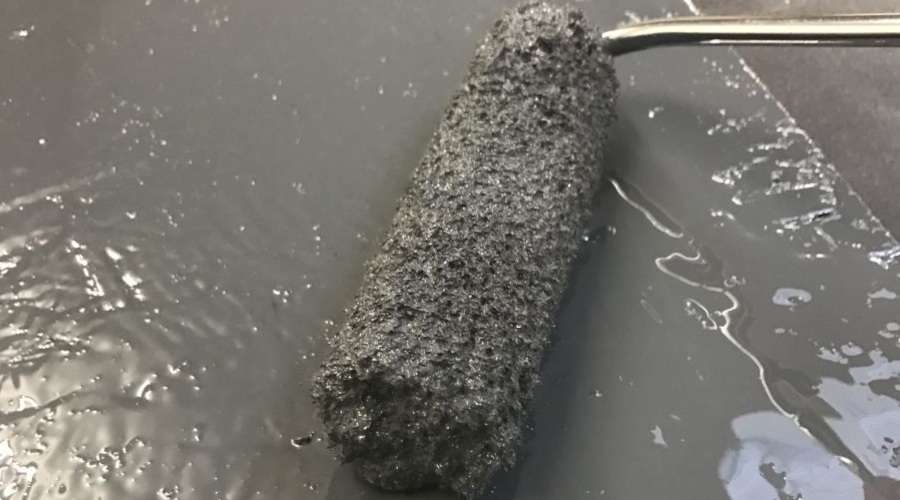
There are few surfaces which cannot be waterproofed using liquid rubber membrane. It requires no special tools for application and is cold applied. The systems are typically applied using ordinary paint brushes and foam rollers.
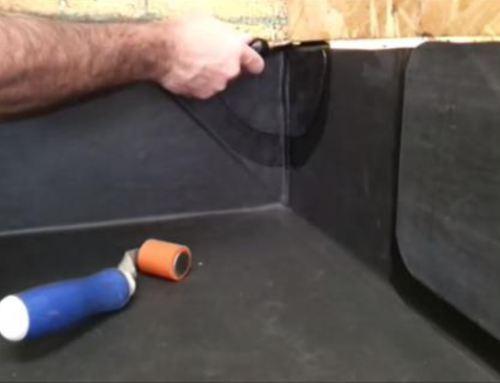
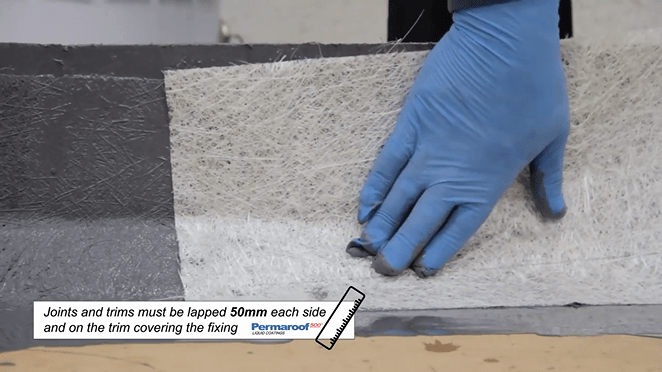
Geotextile matting is embedded into the liquid membrane as a part of the robust and long-lasting waterproofing system.
Liquid rubber is unsuitable for use on the following surfaces:
- Silicone
- Coal tar
- Solvent-based products
- Green concrete (uncured)
- Rotten or water-soaked wood
Encapsulating asbestos
Across the world, the use of asbestos has been almost eliminated after the damaging effects of the dust were revealed during recent times. However, much of the roofing that still exists in unmodernised 1970s garages or outbuildings consists of corrugated asbestos boards, usually ACM (asbestos-containing material) of some type. There is evidence that liquid rubber is an effective medium for the encapsulation of asbestos roofing. It is a bridging encapsulant, which can effectively encapsulate pipes or boards of ACM, and not a penetrating encapsulant (one which penetrates and bonds with any asbestos fibres to prevent flaking or breaking down further).
In some parts of the world, testing has revealed that liquid rubber may be effective in sealing asbestos-concrete boards to prevent any of the fibres escaping. Encapsulating asbestos-containing material using this method is much cheaper than the current asbestos removal and disposal methods, in addition, according to environmental groups, to being much kinder to the planet.
Attitudes to asbestos removal are steadily changing, and not all authorities or experts will recommend its removal.
The removal of asbestos is extremely hazardous and should be approached with care and the correct protective clothing. Local authority approval, advice and sometimes formal permissions must first be sought. Since 2012, owners of UK buildings have a legal obligation to identify, report and take measures to control the release of asbestos fibres into the environment.
What are the other benefits of liquid EPDM?
Both homeowners and commercial users of liquid systems are quickly realising the benefits of this next-generation product for all uses. Simply the range of applications is a benefit in itself, as liquid systems can be used to protect and waterproof properties of all types. Liquid PU has also been developed into an Emergency flat roof repair product, due to its flexibility and ability to be applied in a wide temperature range.
Fast and easy to use – ideal for DIY
The application process for liquid PU is straightforward following rigid, yet clear guidelines for preparation of the surface area, mixing the product and application of the product. If the processes are carefully followed, liquid is suitable for application by the experienced DIY roofer, or non-professional installer.
This opens a wide range of possibilities for the DIY market sector to take advantage of the uses and effectivity of liquid rubber systems. Although liquid PU is currently most commonly found in commercial applications, the benefits of the system are contributing to its success in the domestic sector, particularly for DIY.
Liquid waterproofing systems suppliers, Permaroof UK Ltd, run one-day liquid training courses at its headquarters in Derbyshire. Completion of a one-day course is sufficient to learn basic application and detailing techniques.
Hard-wearing and durable
Once cured, liquid PU forms a comprehensive, effective moisture barrier that can offer 100% waterproofing.
If applied correctly, using the right system for purpose, the cured surface is hard-wearing and has high resistance to extreme temperatures from -40 to 80°C. It can be applied in temperatures as low as -5°C.
Because of the nature of the liquid rubber, it can be applied in layers. It is important to allow each layer to fully cure before applying the next. Several layers of liquid rubber form a thick barrier that has increased resistance to wear and is extraordinarily durable. This is essential when creating a car parking area, for example, where instances of damage and wear are much more likely.
Areas with high foot traffic, such as school play areas, exhibition halls and rooftop eating areas, can also benefit from a double layer of liquid rubber. These types of areas would also benefit from the anti-slip layering technique, which uses a UV top coat to which an anti-slip medium is added, such as silica beads or sand, either directly into the product and applied with a roller or sprinkled onto the uncured UV top coat layer before it begins to dry.
Permaroof100 liquid waterproofing systems carry a 20-year guarantee against failure. To ensure the maximum lifespan, it is critical to carry out adequate preparation of the surface area and install the system according to the exact application guidelines.
Easy to buy online
Liquid rubber systems are today easily accessible for both DIY and trade roofing professionals and can be bought online from reputable flat roof suppliers.
For application to roofing, liquid PU can be tailored into a kit by some suppliers, which ensures that there is no waste or shortfall in materials for unique projects.
As it is still a specialist system, it is recommended that interested parties buy only from reputable sellers who can offer sales assistance, customer support and installation resources.
Cost effective over time
A liquid waterproofing system can prove to be extremely cost-effective over its current expected lifespan of 25-30 years. Once in place, the product requires very little maintenance and remains watertight over its lifespan if installed correctly. Preparation is key and crucial to the installation process. Should the liquid system become damaged, it can quickly and easily be repaired using the same system and application method. There is a specialist industry product for emergency roof repair situations if the damage is serious enough to warrant significant repair works.
The initial cost of liquid waterproofing systems is higher than some roofing materials, such as felt for example, but the long-term cost-saving benefits far outweigh the initial investment.
Is liquid waterproofing suitable for DIY application?
One of the most common reasons a product takes off in the DIY market will be ease of use or application.
It is no surprise that once an innovative product is introduced and made accessible to DIY homeowners in its simplest form, the uptake will rise.
Liquid waterproofing systems offer the DIY sector an opportunity to make safe many surfaces around the home for all the family, such as:
- Anti-skid coatings for driveways
- Anti-slip coatings for garden steps
- Pathways
- Flat roofing
- Gutters
- Balconies
- Drains
- Roof terraces
- Garage roof sealing

Liquid PU application training
For homeowners considering taking liquid application training, Permaroof offer one-day training courses each week at our approved, purpose-built training centre in Derby. Training courses are suitable for both DIY and trade roofers wishing to expand into liquid waterproofing. Support and industry-approved certification and resources available to trade roofing professionals.
Related Posts
How to Apply Liquid Rubber Roofing
How to Apply Liquid Rubber Roofing Permaroof500 liquid coatings offer a versatile, easy to apply system for roofing and a range of other waterproofing projects. Manufactured from liquid polyurethane (PU), commonly known as liquid rubber, this system offers a long-lasting and flexible solution to handle complex roofing systems, flat and

Introducing Permaroof100 Liquid EPDM
Introducing Permaroof100 Liquid EPDM What’s in this guide? In this paper, we will introduce you to the Permaroof100 Liquid EPDM waterproofing system and offer some professional installer tips to help you decide whether it is the system for you. A comprehensive application guide is available to download on the resources

The Uses and Benefits of Liquid Waterproofing
The Uses and Benefits of Liquid Waterproofing In this guide we will examine the uses and benefits of liquid waterproofing for both domestic and commercial situations. Find out why home and business owners are making the move from traditional roofing materials to the latest in liquid rubber applications and systems.
Roofing Emergency Repair
Roofing Emergency Repair Looking for a fast and easy solution to your leaking roof? Calling out an emergency roofer to carry out a roof repair can be a costly business – especially if it’s out of hours. PermaRoof UK has the answer to your emergency roof repairs in its liquid